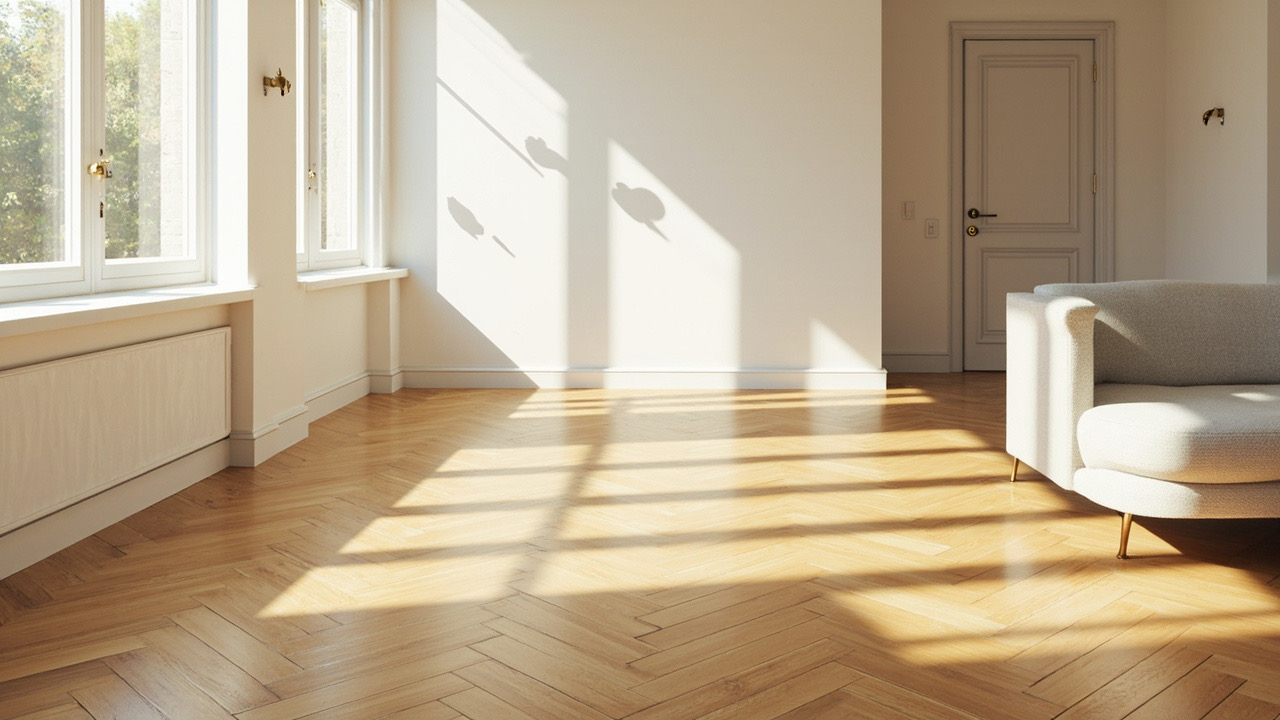
Herringbone and chevron floors have moved from heritage European apartments into Indian living rooms, cafés and boutiques. They look effortless when done well — and they are less forgiving than straight planks when they are not. Here is what to know before you choose one.
Herringbone or chevron?
- Herringbone uses rectangular blocks with square-cut ends, laid in a staggered zig-zag where the end of one block meets the side of the next. It feels traditional and textured.
- Chevron uses blocks with ends cut at an angle (often 45°), so the points meet in a clean, continuous “V”. It reads more modern and directional.
Both need left-hand and right-hand blocks — usually labelled A and B. You need equal numbers of each.
SPC or engineered oak?
- SPC herringbone clicks together, has a waterproof core material and can often be laid over existing tiles. It is the practical choice for kitchens, ground floors and rental homes. Indicative retail: about ₹180–280/sq ft for material, before GST.
- Engineered oak herringbone is real wood with a sandable top layer (a 3 mm layer can usually be refinished). It is warmer, more natural and best in dry, air-conditioned rooms. It is usually glued down. Indicative retail starts higher — roughly ₹280/sq ft and up for mid-range.
These are market ranges from public price guides, not our prices.
Wastage: plan for more
Every row in a herringbone floor ends in an angled cut at the walls, so the offcut allowance is higher than for straight planks:
- Straight planks: about 7%
- Chevron: about 12–18%, typically 15%
- Herringbone: about 15–20%, more in small or irregular rooms
Our calculator uses 18% for herringbone by default and rounds the A and B boxes to equal numbers.
Layout decisions that matter
- Direction: run the “arrow” along the longest view in the room, usually from the entrance towards the window.
- Centre line: the installer snaps a centre line so the pattern sits symmetrically between the walls — this matters more than in a straight-plank floor.
- Borders: a single straight border plank around the room frames the pattern and simplifies the edge cuts.
- Transitions: where herringbone meets a straight floor in the next room, use a threshold profile or change direction at the doorway.
Installation and cost
Herringbone takes longer to lay than straight planks — more cutting, more setting-out — so labour costs more. Indicative installation rates for SPC herringbone are around ₹25–50/sq ft versus ₹15–40 for straight SPC, before GST. Ask for setting-out and borders to be included in the quote.
The subfloor must be flat (within about 3 mm over 2 m). Small blocks reveal unevenness more than long planks do.
Is it right for your room?
Herringbone works best in rooms with a clear shape — living rooms, corridors, dining rooms, boutique floors. In a very small room the pattern can feel busy; a chevron or a wider straight plank may suit it better. Try both in our room visualiser (colours approximate), then order free samples of the Heritage Herringbone range to see them in your own light.